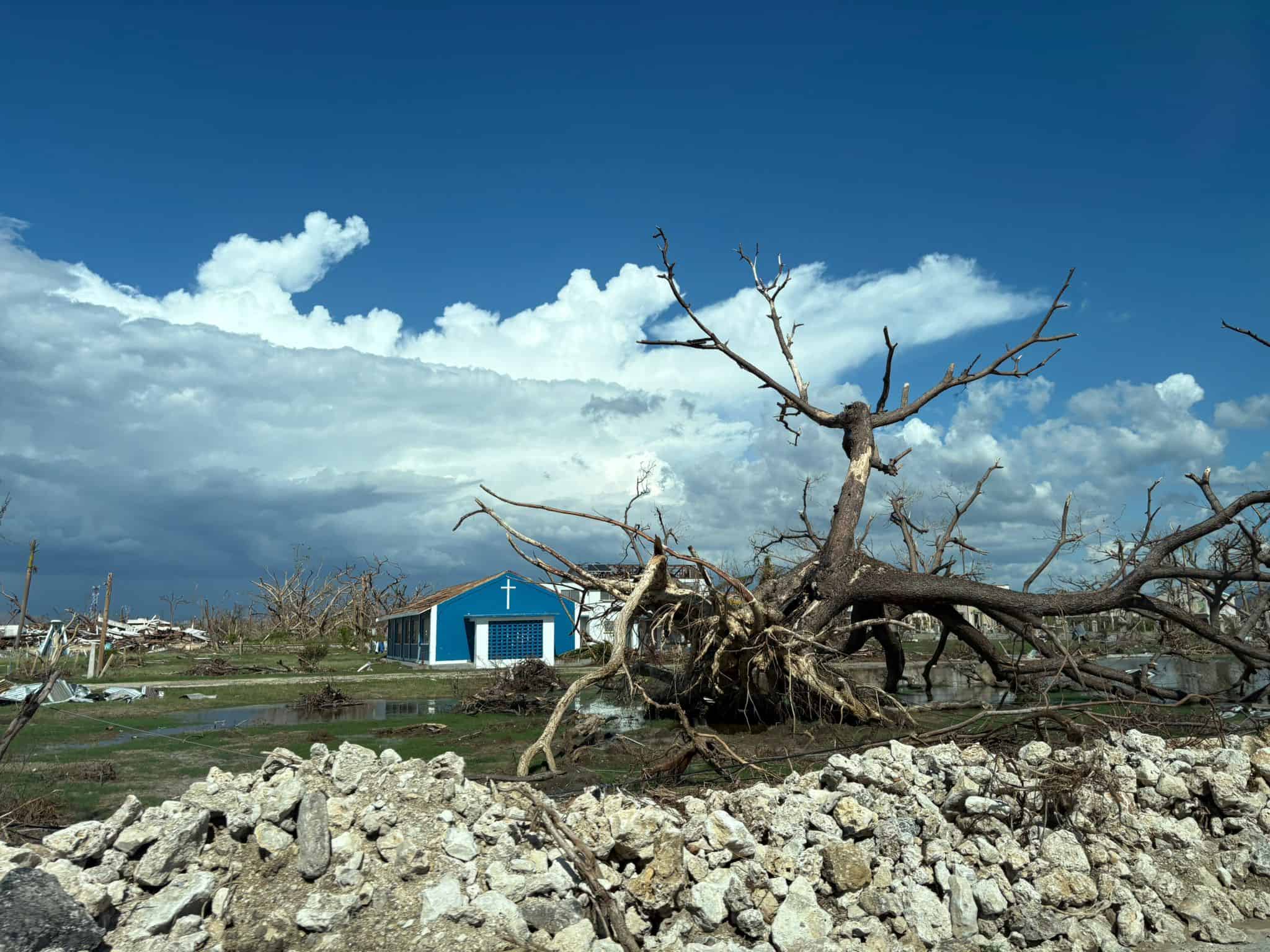


On October 28th, 2025, Hurricane Melissa made landfall in Jamaica. As a Category 5, this the strongest storm on record to hit the Caribbean Island. Approximately 1.5 million people living on the island – more than half the population – have been affected.
1. Why were the UK EMT deployed to Jamaica?
As a result of the catastrophic hurricane, many health services have been disrupted with some health facilities destroyed entirely. Houses and livelihoods have been destroyed, and much of the island is experiencing severe power and water outages.
An advance assessment team from UK-Med arrived in Jamaica on 31st October to establish needs and coordinate with the other health actors on the ground. As a result, we have now deployed as the UK Emergency Medical Team at the request of the Ministry of Health and Wellness, Jamaica, the British High Commission, Jamaica, and the UK Foreign, Commonwealth and Development Office.
Through this response we will provide communities impacted by Hurricane Melissa with access to primary health care and reduce the burden on secondary health care facilities, alongside providing respite to Ministry of Health and Wellness staff, allowing them to focus on rebuilding their homes.

2. What is UK-Med seeing on the ground?
Medical Coordinator and nurse, Clara Markiewicz, who is currently in Jamaica, describes the current situation:
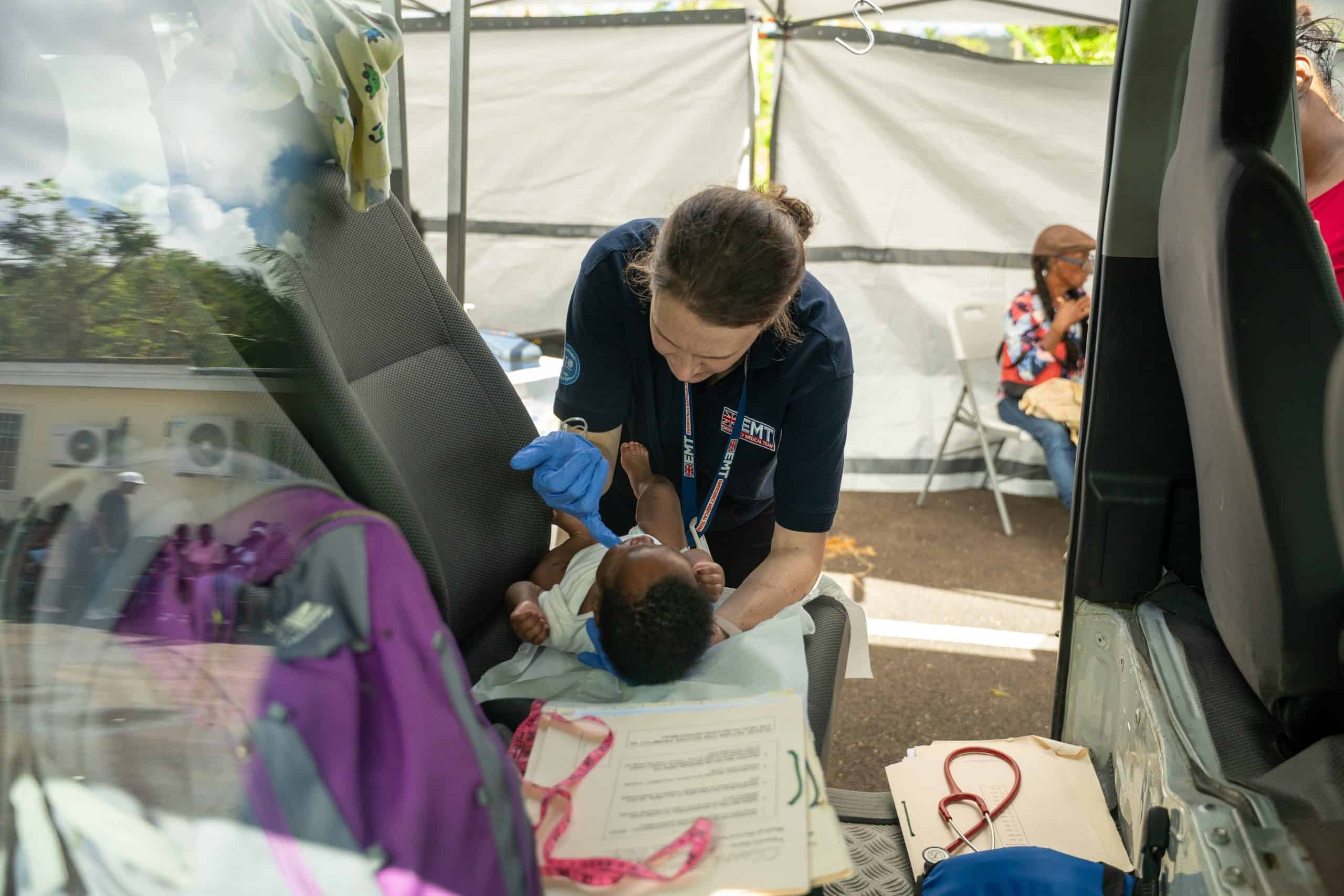
“Our mobile medical teams have been operating in Trelawny Parish since 17th November. The area has seen significant damage after Hurricane Melissa and our main focus is to support the local primary healthcare centres to re-open to ensure essential access to community health services. We have already seen over 1000 patients in 18 unique locations, sending three small and fully mobile teams to different clinic sites every day to access some of the most rural communities.
The hurricane has been devastating to the communities – people have lost their homes, access to usual health services has been drastically reduced (or for some totally cut-off), infectious disease outbreaks have been declared as a result of the flooding and many are experiencing acute mental health crises. On a daily basis, our team is seeing the lasting impact of this disaster – treating high numbers of acutely unwell patients with uncontrolled chronic conditions such as high blood pressure and diabetes, as well as patients presenting with injuries from the hurricane itself.
We work alongside the incredible national staff, embedding into the local health system, helping to relieve them of their usual caseload so they can focus on getting their health centres back up and functional again. We have already started to see the impact but there’s still a huge amount of work to be done and our team will continue to stand by the Jamaican health teams to support as much as we can.”

3. What are UK-Med’s key concerns?
Heavy rainfall has led to increased flooding and landslides in many areas and has blocked off roads, meaning some communities have been temporarily cut off and access difficult, with primary health care facilities also suffering from flood and hurricane damage.
The increased flooding has also raised concerns of waterborne diseases and around 30,000 people have been displaced living in makeshift shelters, according to International Organization of Migration (IOM). Already UN Women estimates more than 445,000 women and girls have been directly affected.
This is the second major hurricane to strike Jamaica in just 16 months, following Hurricane Beryl in June 2024. Many communities are still recovering, which has further exacerbated the need for support, with a lot of infrastructure already struggling to keep up with demand. A critical mass of supplies is expected to be delivered and distributed in the next few weeks, which will hopefully reduce some of this burden and support the local communities.

4. What is UK EMT doing to support the health needs?
A 13-person team has been sent to respond including leadership and coordination experts, logistical support, three general practitioners (GPs), three nurses and two midwives. Together, they are coordinating direct (hands-on) primary healthcare to the local communities, including triage rapid screening of cases, treatment and, where possible, transfers to local hospitals.
Activities include∶
- Increased level of access to primary care through provision of supplementary staff.
- Respite for national health staff to allow time to clean facilities and organise their damaged family homes.
- Advocacy for repair and undertaking of light / temporary repair work at PHC facilities in rural and remote communities
Throughout the response the team will continue to monitor and adjust medical care to health needs across the wider area as they arise.
5. How does the team work with Jamaican health services and partners?
Our mobile teams are able to adapt to the different clinic sites we support depending on the level of damage the facilities have suffered – this ranges full mobile clinic set-ups where the original buildings have been destroyed, to UK EMT clinicians embedding into the national teams working in clinics that are still structurally functional. By maintaining this level of flexibility, UK EMT can provide tailored support specific to the needs of each clinic across Trelawny.